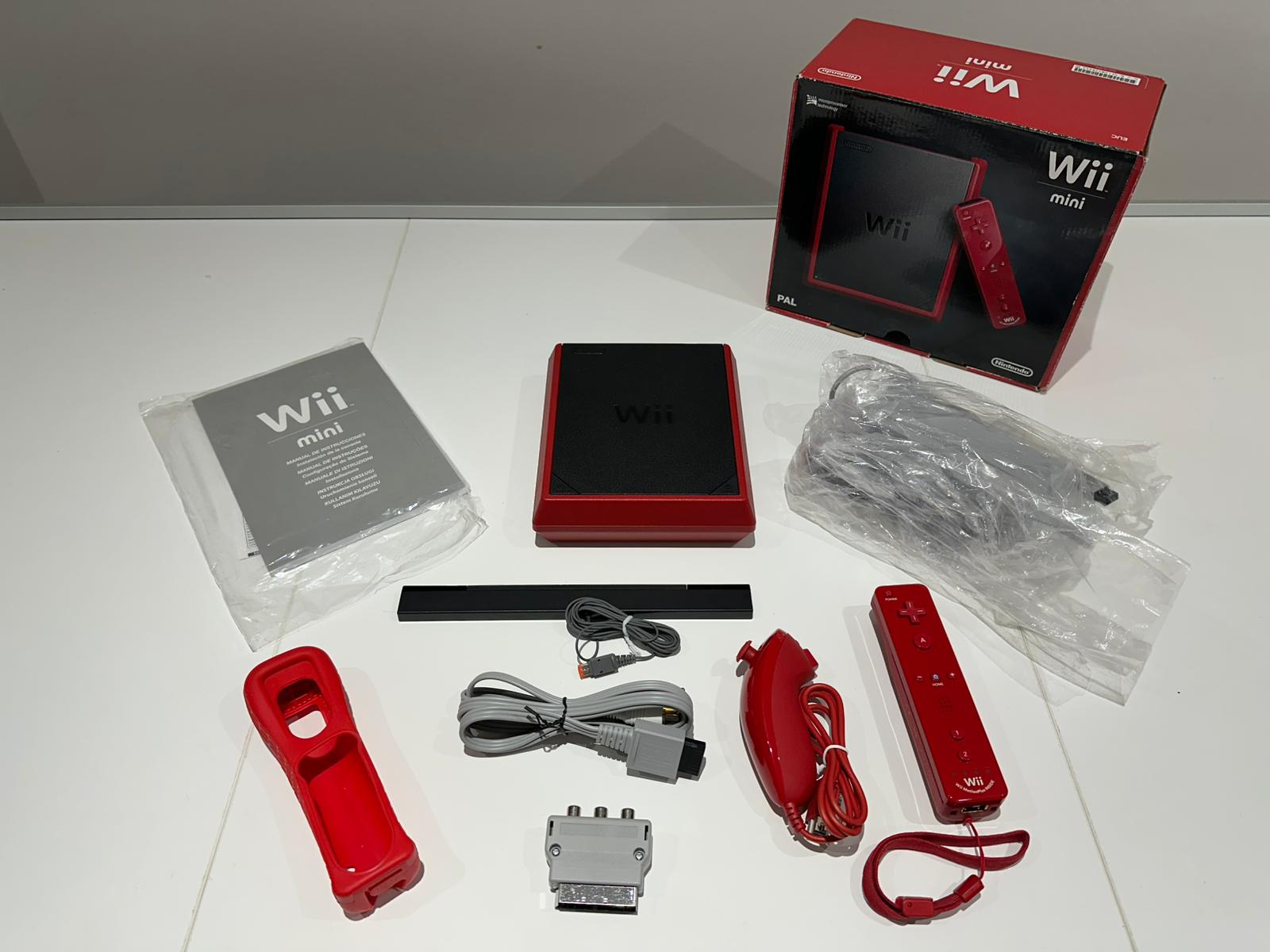
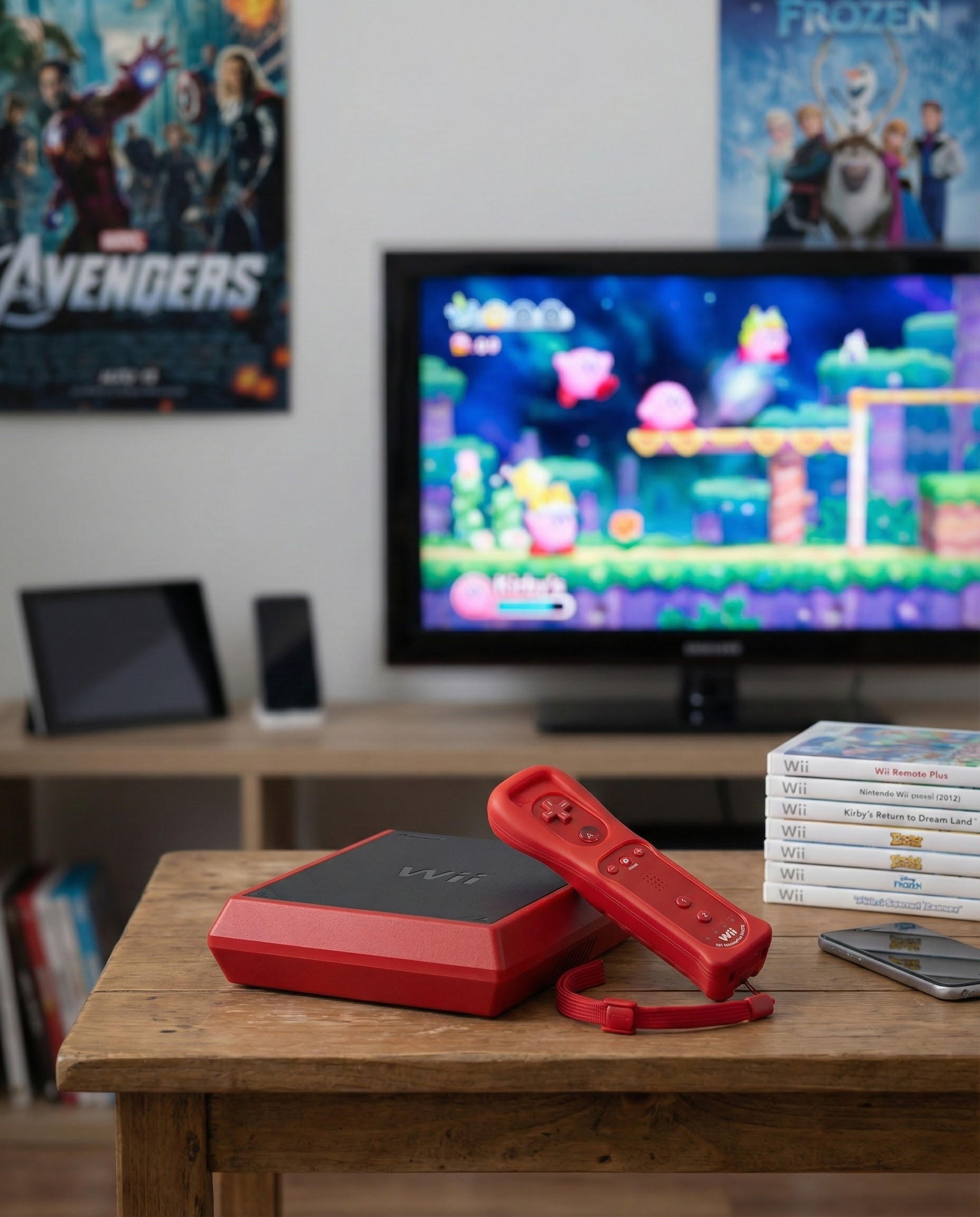
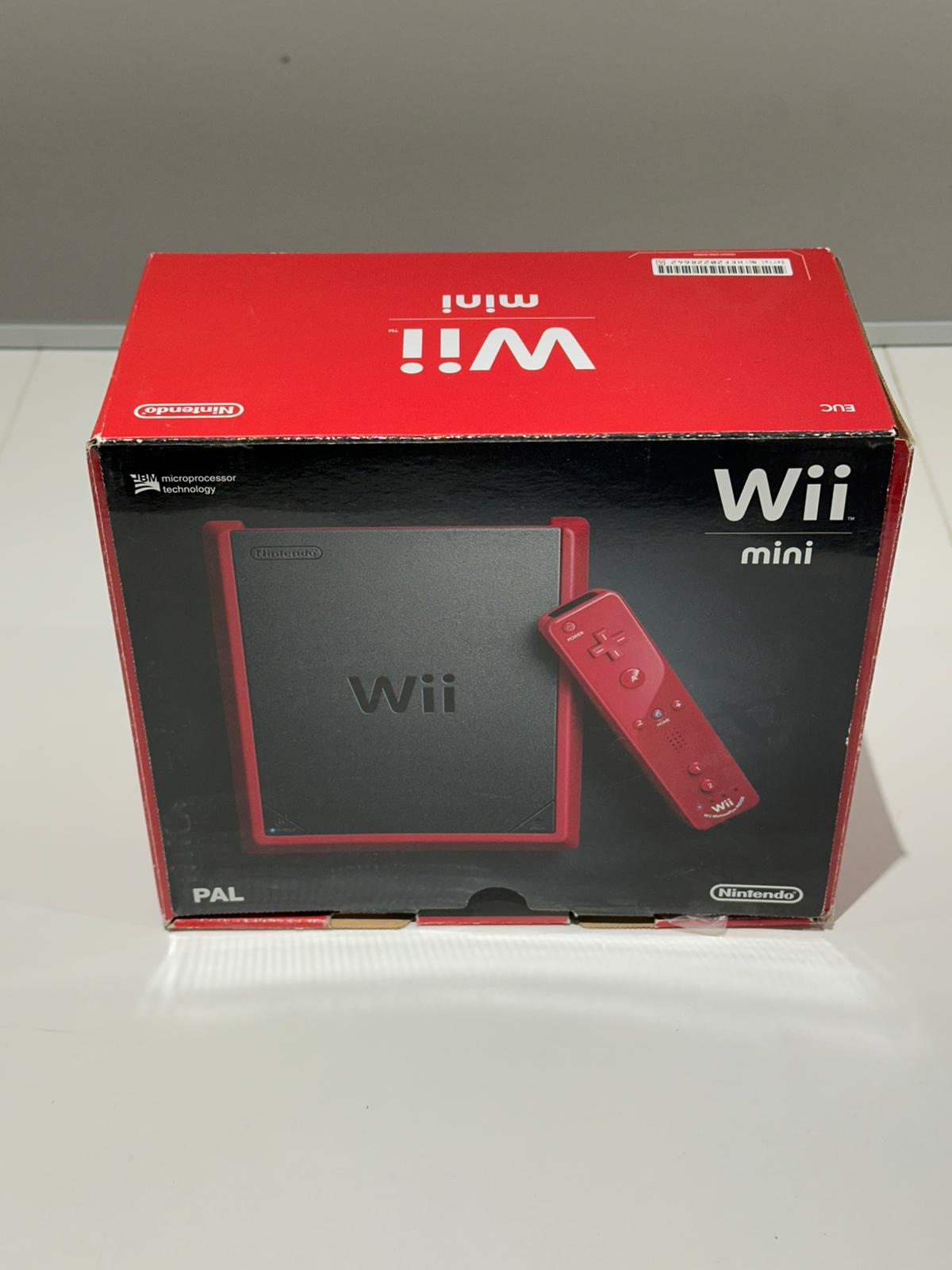
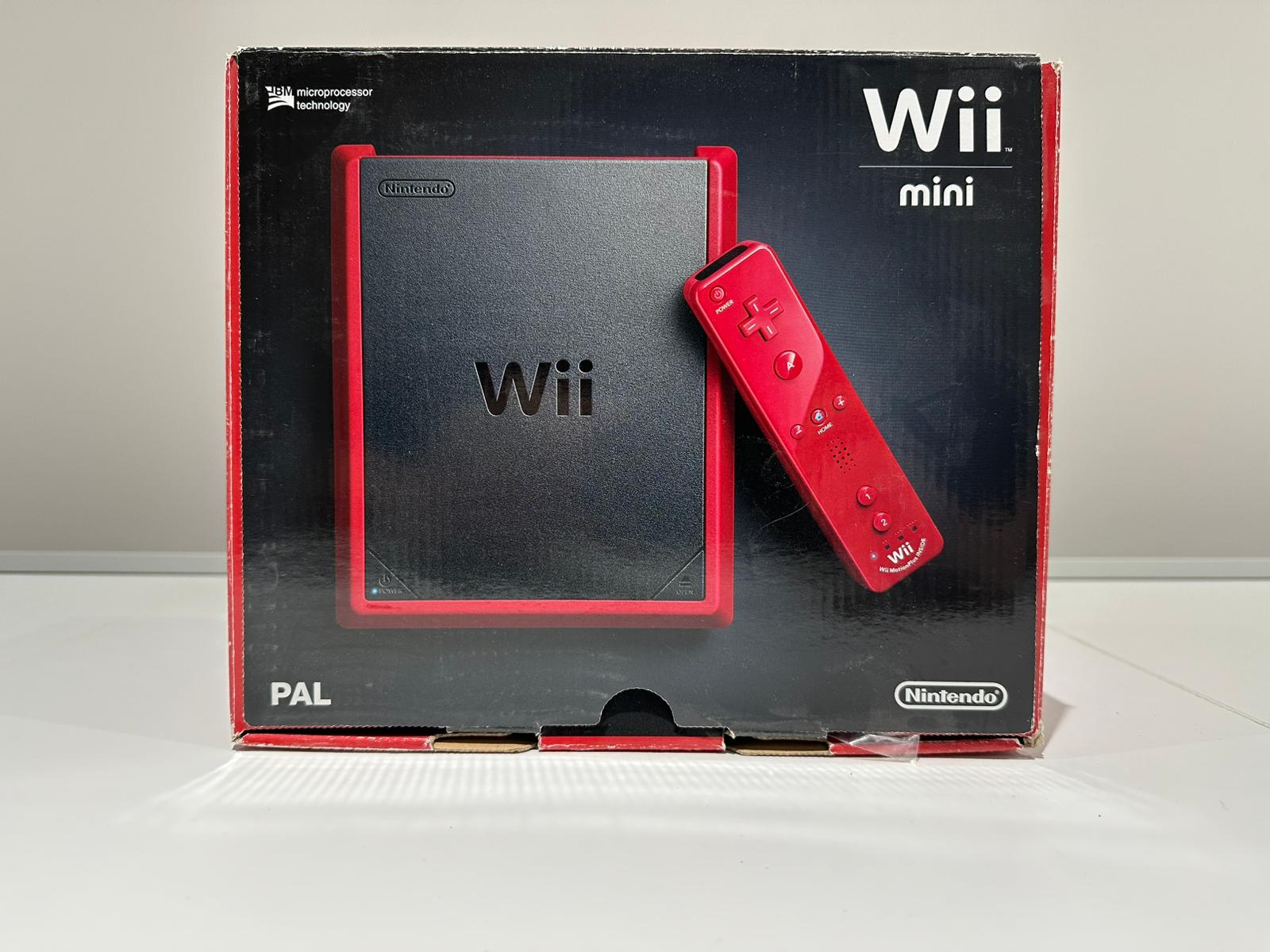
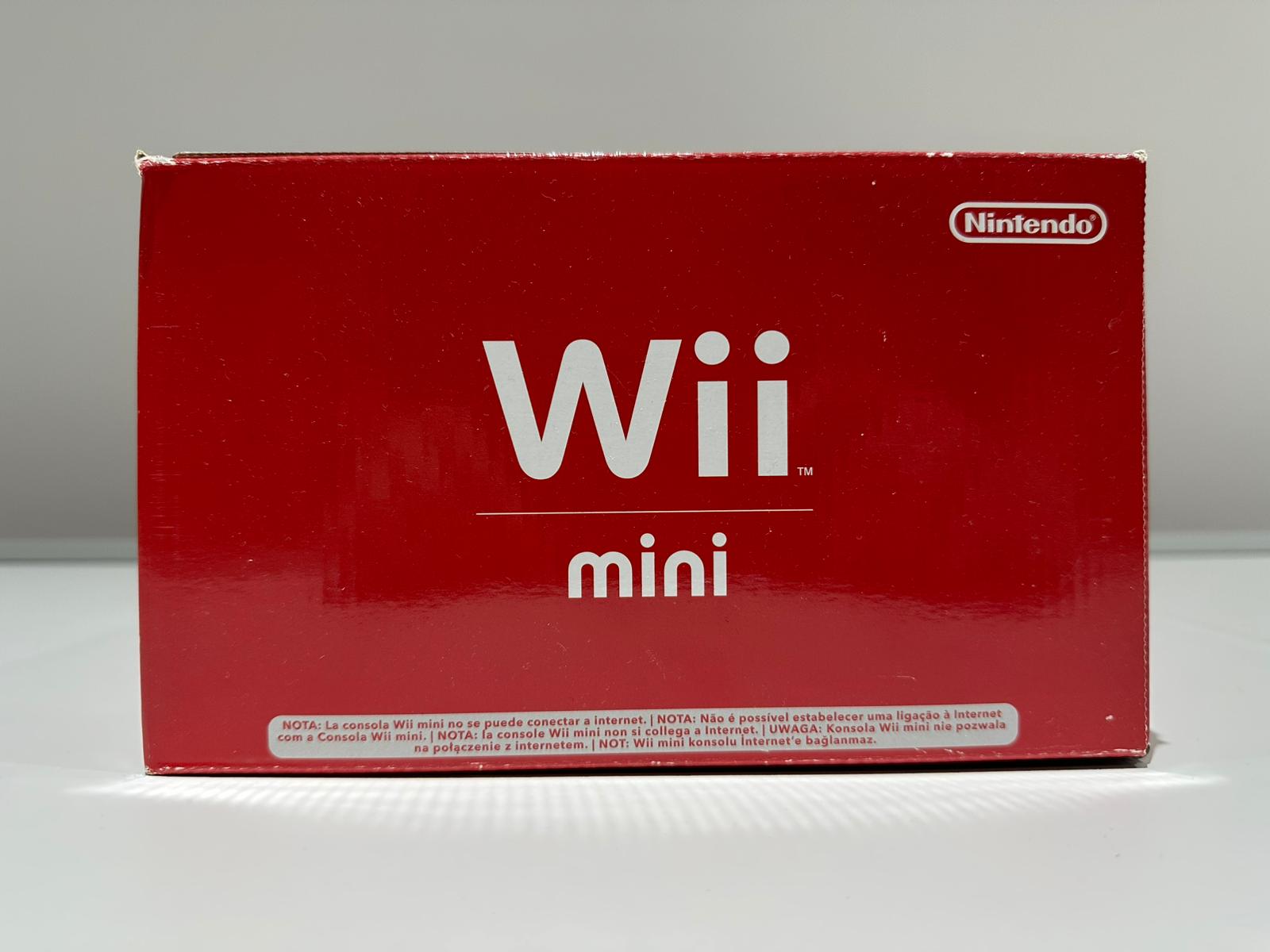
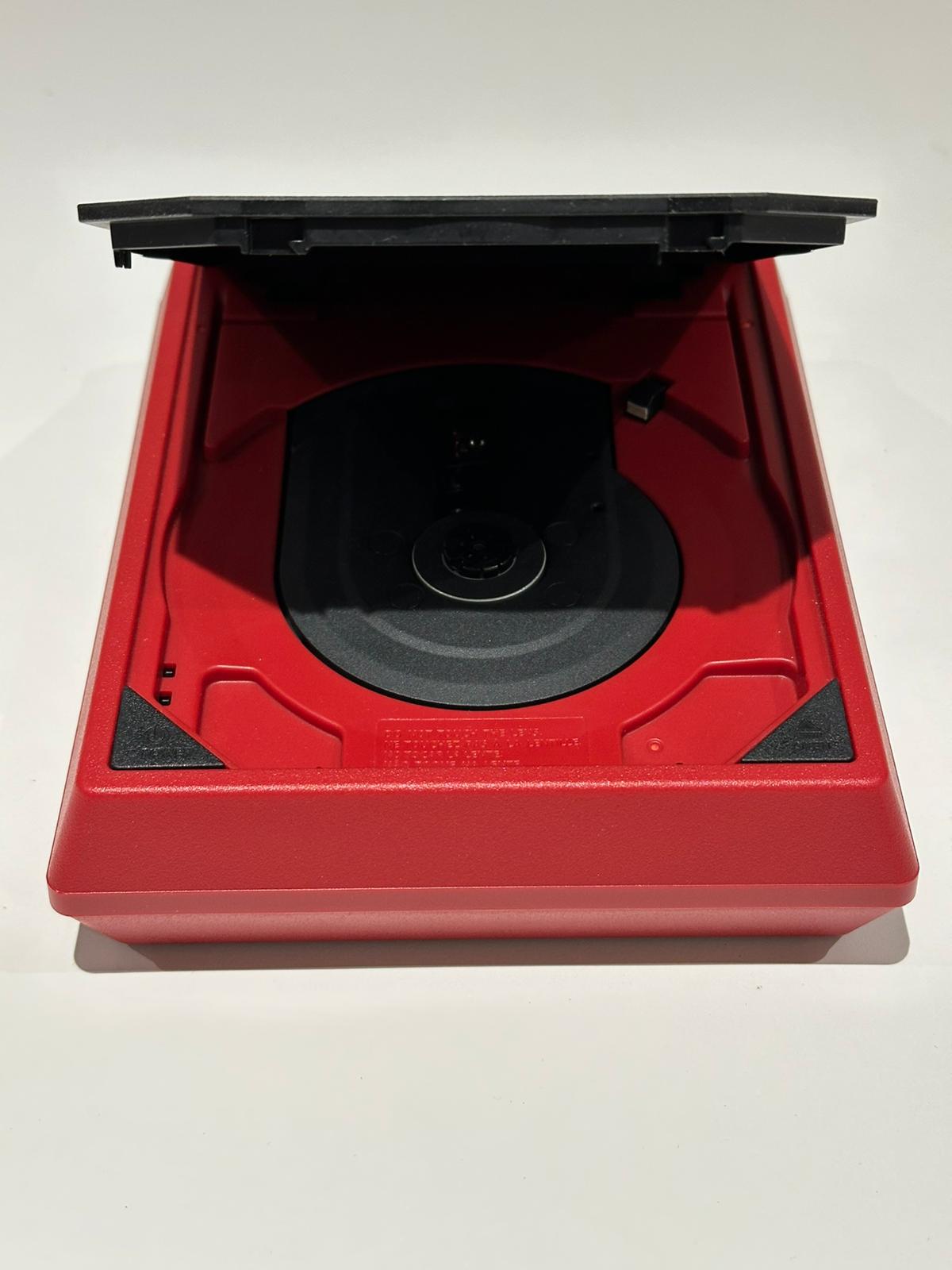
The Wii Mini, released by Nintendo in 2012, represents a streamlined and budget-conscious iteration of the original Wii console. Designed as a more affordable alternative, the Wii Mini aimed to capture a broader market, particularly in regions where cost was a significant barrier to entry. While retaining the core motion-controlled gameplay that defined the Wii, the Mini featured a smaller form factor and a distinctive red-and-black color scheme. It marked a strategic shift by Nintendo to extend the lifespan of the Wii platform and capitalize on its established software library.
However, the Wii Mini came with notable trade-offs. The console lacked online connectivity, effectively removing access to the Wii Shop Channel and online multiplayer functionality. It also removed support for SD card storage, limiting save data management. Despite these limitations, the Wii Mini found a niche among consumers seeking an accessible and family-friendly gaming experience, particularly those primarily interested in local multiplayer and single-player gameplay. Its legacy is as a simplified, cost-effective entry point into the world of Wii gaming, albeit with significant sacrifices in functionality compared to its predecessor.
2012
NINTENDO
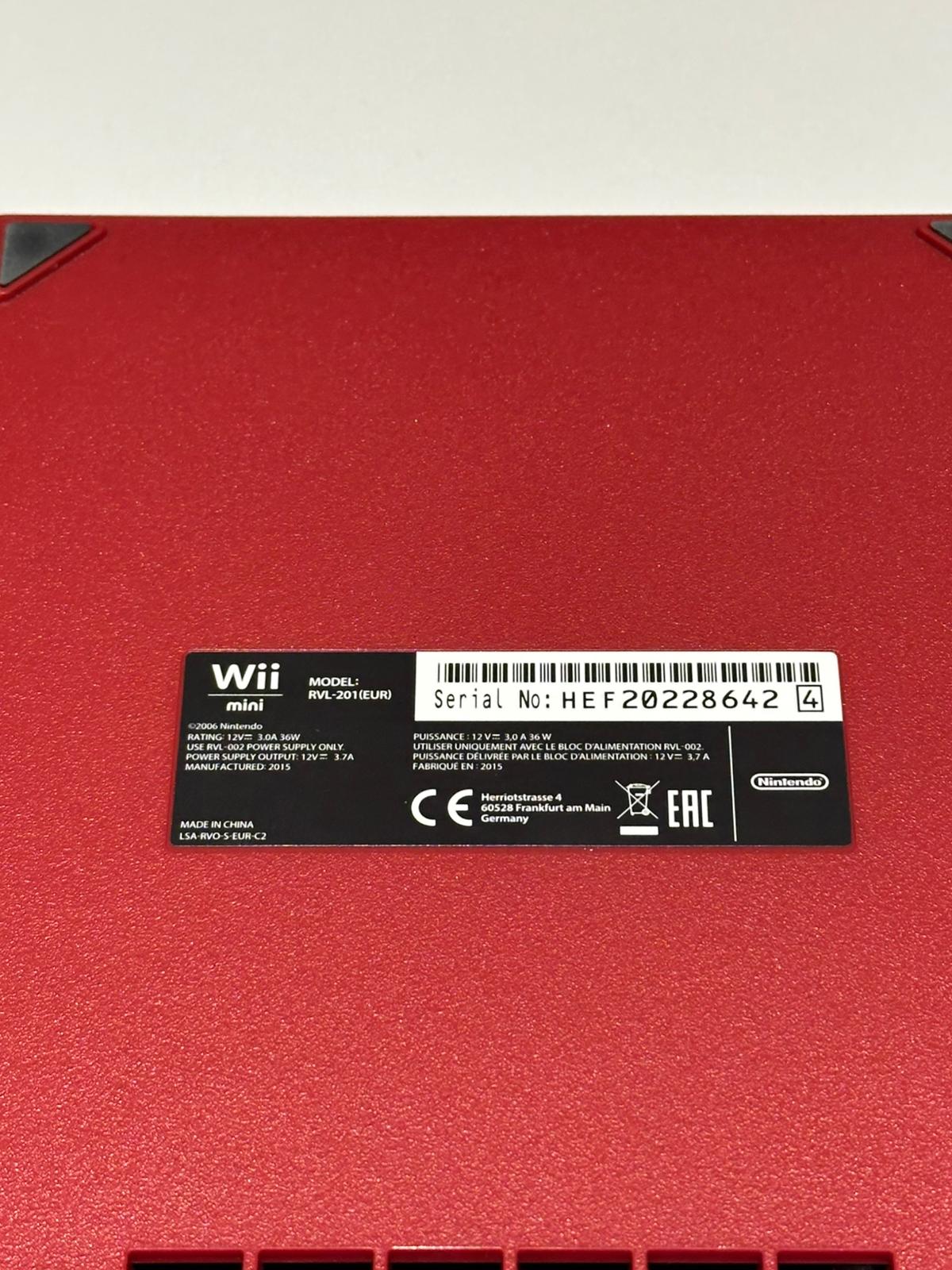
WII MINI
📜 History & Legacy
⚙️ Specifications
- ❖ CPU: IBM PowerPC-based Broadway processor
- ❖ GPU: ATI Hollywood GPU
- ❖ RAM: 88 MB total (64 MB main RAM, 24 MB external 1T-SRAM)
- ❖ Storage: Internal flash memory (limited; primarily for system files)
- ❖ Media: Wii Optical Disc
🎮 Top 10 Games
- ★ Mario Kart Wii
- ★ Wii Sports
- ★ New Super Mario Bros. Wii
- ★ Super Mario Galaxy
- ★ Super Smash Bros. Brawl
- ★ The Legend of Zelda: Twilight Princess
- ★ Wii Play
- ★ Animal Crossing: City Folk
- ★ Metroid Prime 3: Corruption
- ★ Donkey Kong Country Returns
💡 Curiosities
- ? Did you know the Wii Mini was initially released only in Canada?
- ? The Wii Mini does not have online capabilities, removing access to the Wii Shop Channel.
- ? It lacks an SD card slot, making save data management more challenging.
- ? The console's design is significantly smaller than the original Wii.
- ? The Wii Mini only supports composite video output, not component.
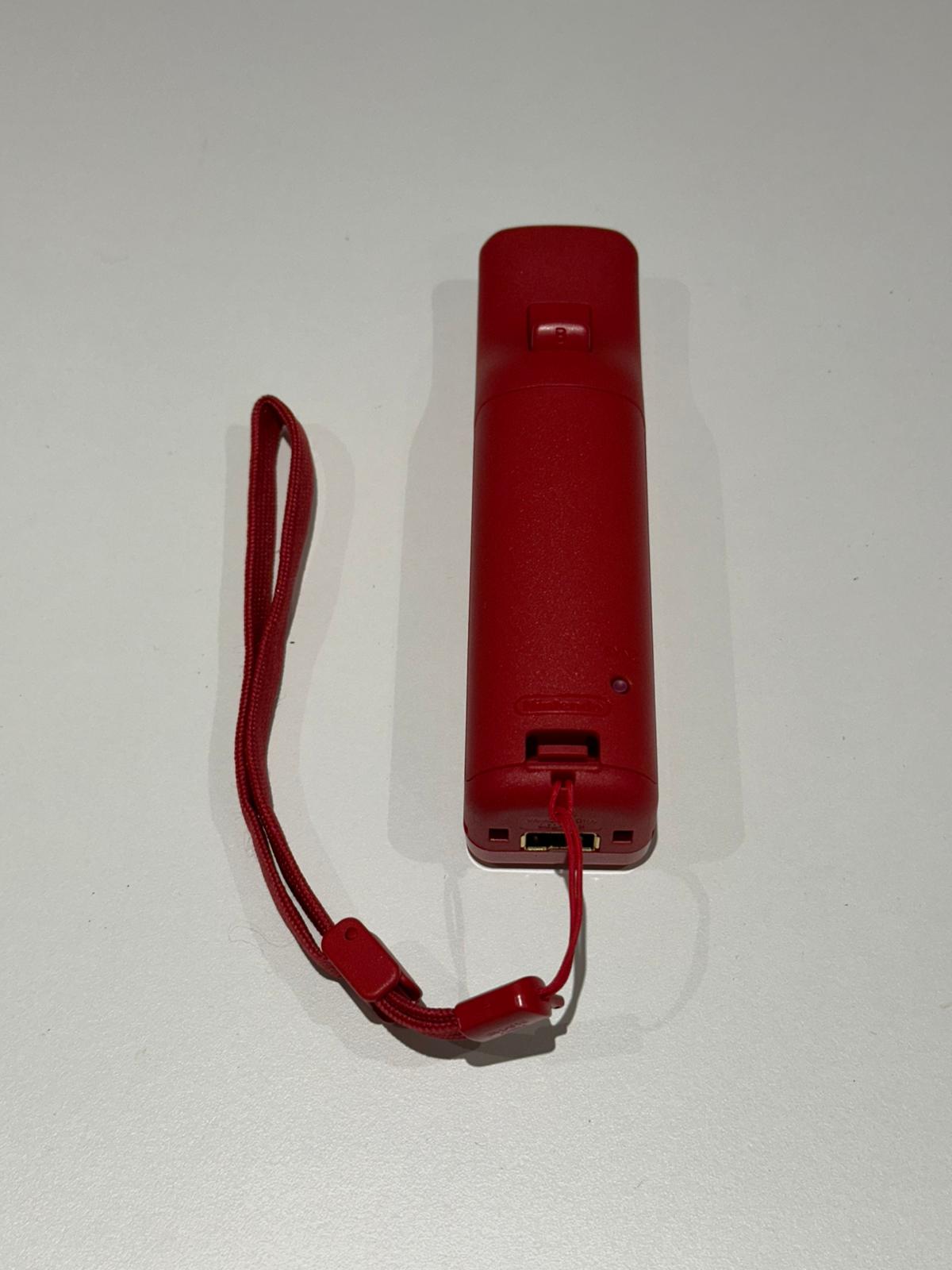
- ? It came bundled with a Wii Remote Plus and Nunchuk controller.
- ? The power button is a physical slider switch, unlike the original Wii's button.
- ? The Wii Mini's launch price was significantly lower than the original Wii's price at launch.
- ? The console's red and black color scheme is unique to the Wii Mini.
- ? Despite its limitations, the Wii Mini can still play the vast majority of Wii games.
📸 Gallery
.jpeg)
.jpeg)
.jpeg)
.jpeg)
.jpeg)
.jpeg)
.jpeg)
.jpeg)
.jpeg)
.jpeg)
.jpeg)
.jpeg)
.jpeg)
.jpeg)
.jpeg)
.jpeg)
.jpeg)
.jpeg)
.jpeg)
.jpeg)
.jpeg)
.jpeg)
.jpeg)
.jpeg)
.jpeg)
.jpeg)
.jpeg)